The pavers
The top layer: color, size, shape and laying pattern.
PAVERS EXPLAINED
Pavers are individual units used to create a driveway, patio, walkway or pool deck. Their material, pattern and installation work together to form the finished surface.
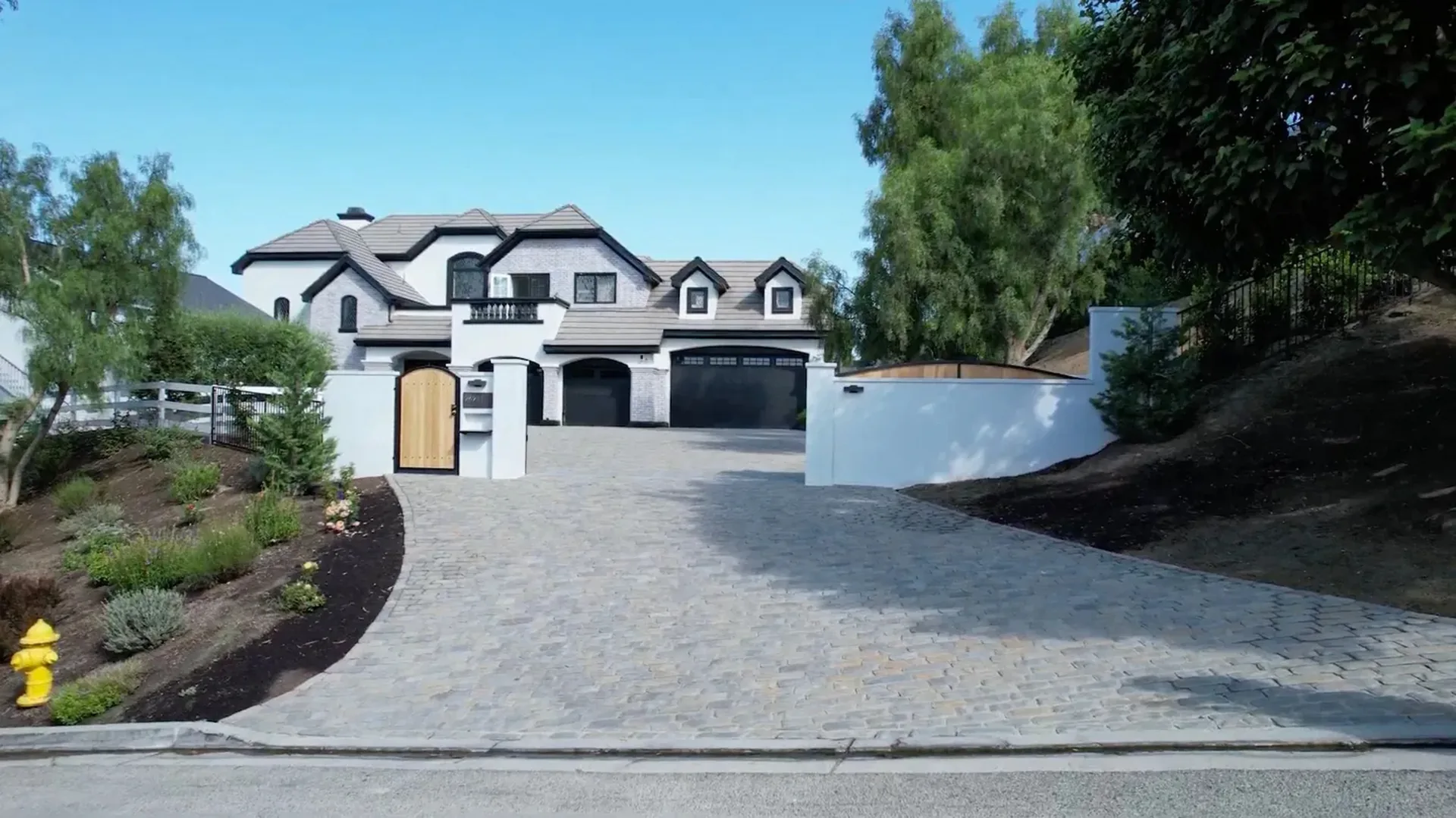
Illustrative property view.
PLAIN ENGLISH, NO JARGON
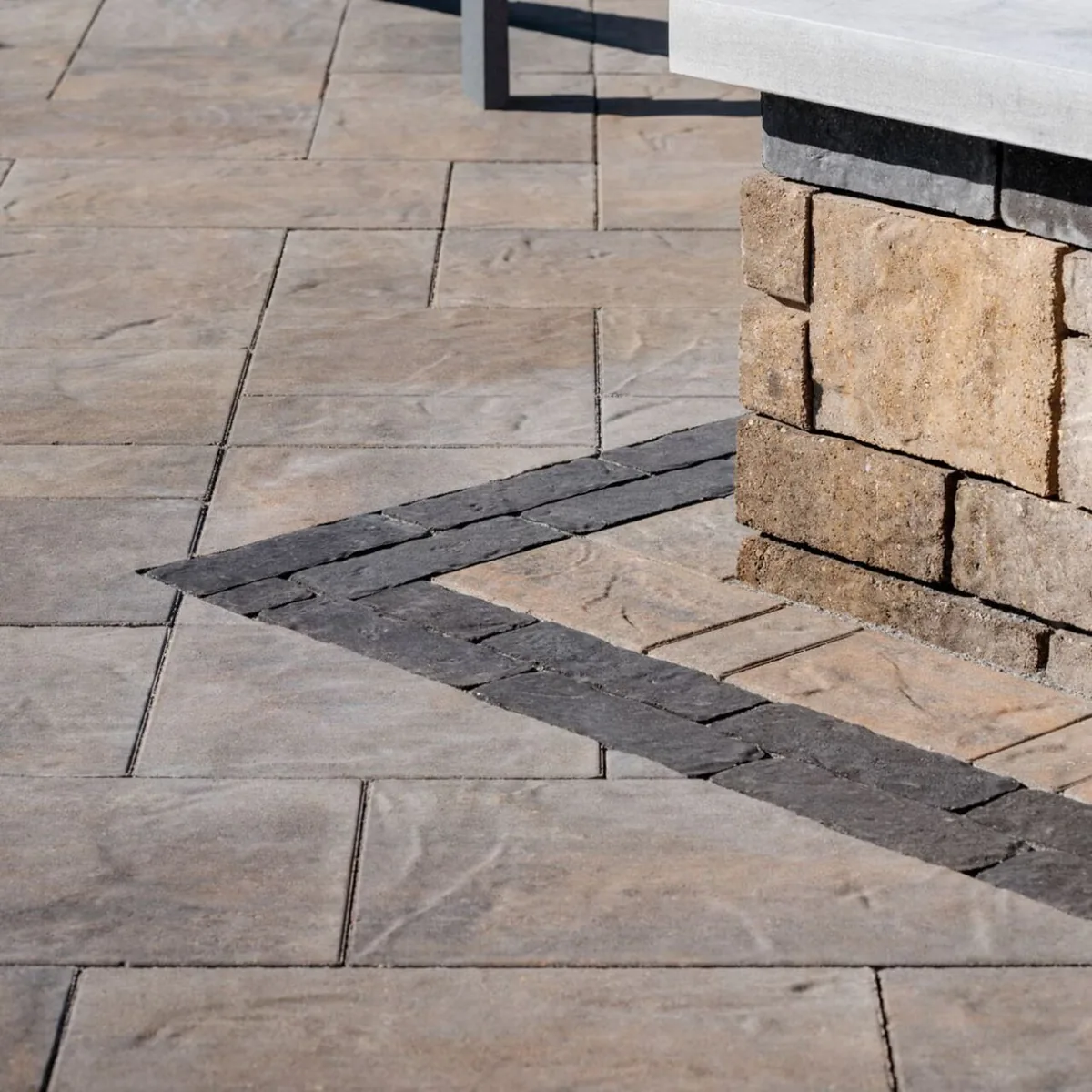
Pavers can be made from concrete, porcelain, natural stone or clay brick. Concrete units are manufactured in a range of sizes and finishes; other materials bring their own textures, colors and installation requirements.
In a conventional interlocking concrete system, joints and edge restraints help the units work together over a prepared base. The finished pavement is a system, rather than a collection of loose pieces.
You choose the visible material, color and pattern. The supporting construction is specified around the product, ground conditions and how the area will be used.
HOW THEY'RE BUILT
This is a typical interlocking concrete paver assembly, read from the surface down. Materials and depths depend on the selected system, soil and intended traffic.
The top layer: color, size, shape and laying pattern.
A prepared bedding layer that supports the pavers at the planned grade.
A compacted aggregate layer specified for the ground conditions and intended load.
Prepared ground beneath the base, with levels and drainage considered as part of the system.
WHAT HOLDS THE PATTERN TIGHT
Joint sand is swept into the gaps between pavers. It packs each unit against its neighbors, so weight spreads across many pavers instead of pushing one down.
An edge restraint runs along the outside row so the pavers cannot spread apart. Without it, joints open and the pattern drifts. Ask how edges are held before you sign.
YOUR YARD, YOUR CALL
Driveways, entry walks, patios and pool decks, anywhere you want pattern and color underfoot. To narrow it down, think about whether cars will park on it, where rain runs now and what the surface has to meet.
Ready to pick colors and patterns? Start with the paver guide. Ready to talk installation? The Orange County pavers page shows how we build them.
Poured concrete forms a slab; pavers form a surface from individual units with joints between them. Both need appropriate ground preparation and drainage. Concrete uses planned joints to help manage movement and cracking, while an interlocking pavement relies on the interaction of its units, joints, edges and supporting layers.
A conventional interlocking concrete paver system uses a bedding layer over compacted aggregate and prepared ground. Other products and settings may require different assemblies. The correct installation depends on the selected paver, existing conditions and intended use, so the product guidance and site specification should be considered together.
Pavers are installed in layers, from the ground up. The area is excavated and graded so water drains, a crushed rock base goes in and is compacted, then a smooth bed of sand. The pavers are laid in pattern, cut to fit at the edges, locked in with edge restraint and finished with joint sand.
Joint sand fills the narrow gaps between pavers and locks them together, so each unit braces the ones around it. It does a different job from the bedding sand below, which gives each paver a flat bed to sit in. Joint sand goes in last, once the pattern is laid.
An edge restraint does. It lines the outer row, often as a concrete curb, a border set in concrete or edging staked into the base, and stops the outer pavers from sliding outward. Everything inside leans on that edge, so it has to be solid.
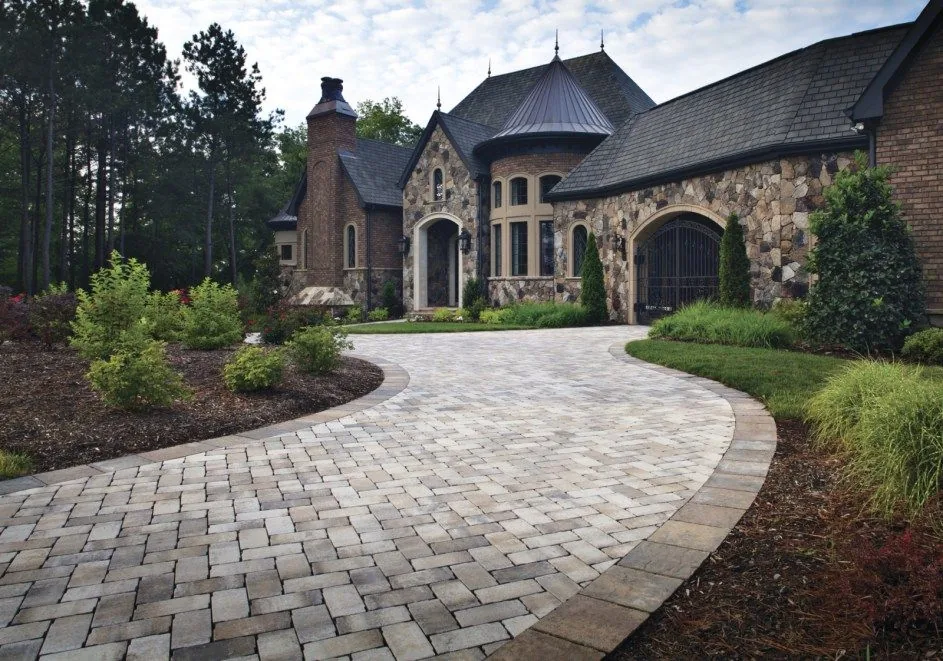
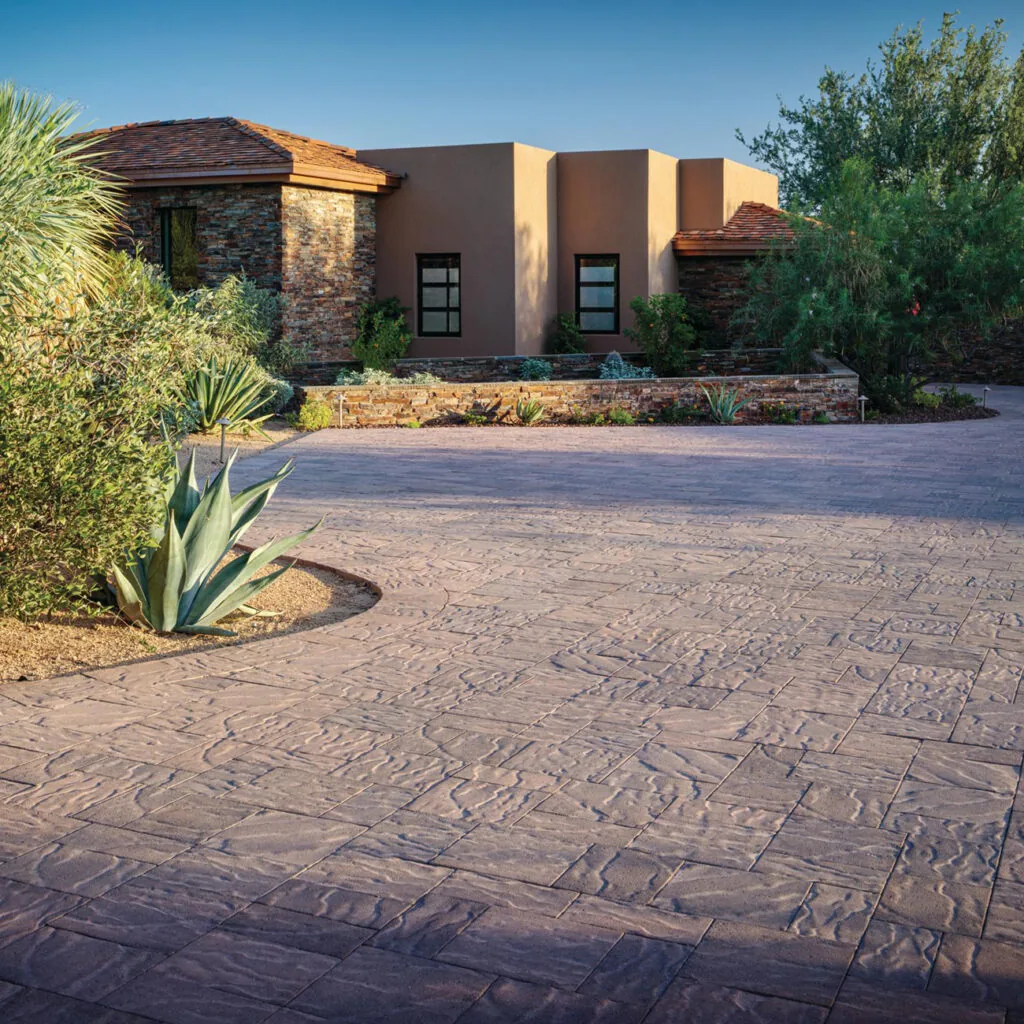
Pavers are worth considering when you want choice in material, pattern, texture and borders. They can connect a driveway, patio and paths while allowing each area its own purpose. Their value depends on both the selected product and installation, so compare complete proposals alongside the finished look.
READY WHEN YOU ARE
Tell us your city and the space you have in mind. We will take it from there.
PAVERS EXPLAINED
Pavers are individual units used to create a driveway, patio, walkway or pool deck. Their material, pattern and installation work together to form the finished surface.
Illustrative property view.
PLAIN ENGLISH, NO JARGON
Pavers can be made from concrete, porcelain, natural stone or clay brick. Concrete units are manufactured in a range of sizes and finishes; other materials bring their own textures, colors and installation requirements.
In a conventional interlocking concrete system, joints and edge restraints help the units work together over a prepared base. The finished pavement is a system, rather than a collection of loose pieces.
You choose the visible material, color and pattern. The supporting construction is specified around the product, ground conditions and how the area will be used.
HOW THEY'RE BUILT
This is a typical interlocking concrete paver assembly, read from the surface down. Materials and depths depend on the selected system, soil and intended traffic.
The top layer: color, size, shape and laying pattern.
A prepared bedding layer that supports the pavers at the planned grade.
A compacted aggregate layer specified for the ground conditions and intended load.
Prepared ground beneath the base, with levels and drainage considered as part of the system.
WHAT HOLDS THE PATTERN TIGHT
Joint sand is swept into the gaps between pavers. It packs each unit against its neighbors, so weight spreads across many pavers instead of pushing one down.
An edge restraint runs along the outside row so the pavers cannot spread apart. Without it, joints open and the pattern drifts. Ask how edges are held before you sign.
YOUR YARD, YOUR CALL
Driveways, entry walks, patios and pool decks, anywhere you want pattern and color underfoot. To narrow it down, think about whether cars will park on it, where rain runs now and what the surface has to meet.
Ready to pick colors and patterns? Start with the paver guide. Ready to talk installation? The Orange County pavers page shows how we build them.
Poured concrete forms a slab; pavers form a surface from individual units with joints between them. Both need appropriate ground preparation and drainage. Concrete uses planned joints to help manage movement and cracking, while an interlocking pavement relies on the interaction of its units, joints, edges and supporting layers.
A conventional interlocking concrete paver system uses a bedding layer over compacted aggregate and prepared ground. Other products and settings may require different assemblies. The correct installation depends on the selected paver, existing conditions and intended use, so the product guidance and site specification should be considered together.
Pavers are installed in layers, from the ground up. The area is excavated and graded so water drains, a crushed rock base goes in and is compacted, then a smooth bed of sand. The pavers are laid in pattern, cut to fit at the edges, locked in with edge restraint and finished with joint sand.
Joint sand fills the narrow gaps between pavers and locks them together, so each unit braces the ones around it. It does a different job from the bedding sand below, which gives each paver a flat bed to sit in. Joint sand goes in last, once the pattern is laid.
An edge restraint does. It lines the outer row, often as a concrete curb, a border set in concrete or edging staked into the base, and stops the outer pavers from sliding outward. Everything inside leans on that edge, so it has to be solid.
Pavers are worth considering when you want choice in material, pattern, texture and borders. They can connect a driveway, patio and paths while allowing each area its own purpose. Their value depends on both the selected product and installation, so compare complete proposals alongside the finished look.
READY WHEN YOU ARE
Tell us your city and the space you have in mind. We will take it from there.