Driveways
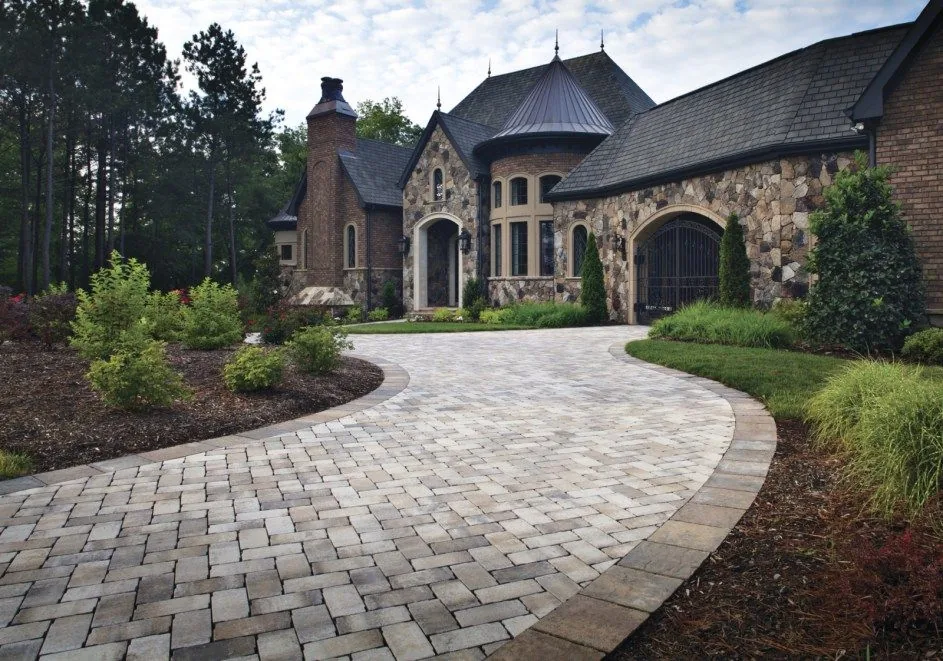
Old brick or tired concrete comes out down to soil. Driveway-rated pavers in brick tones and shapes go onto new compacted base, every edge locked.
BRICK-LOOK DRIVEWAYS & PATIOS
Refresh the driveway, patio or walks at your Long Beach home, with materials and proportions that respect the house and improve how the space works.
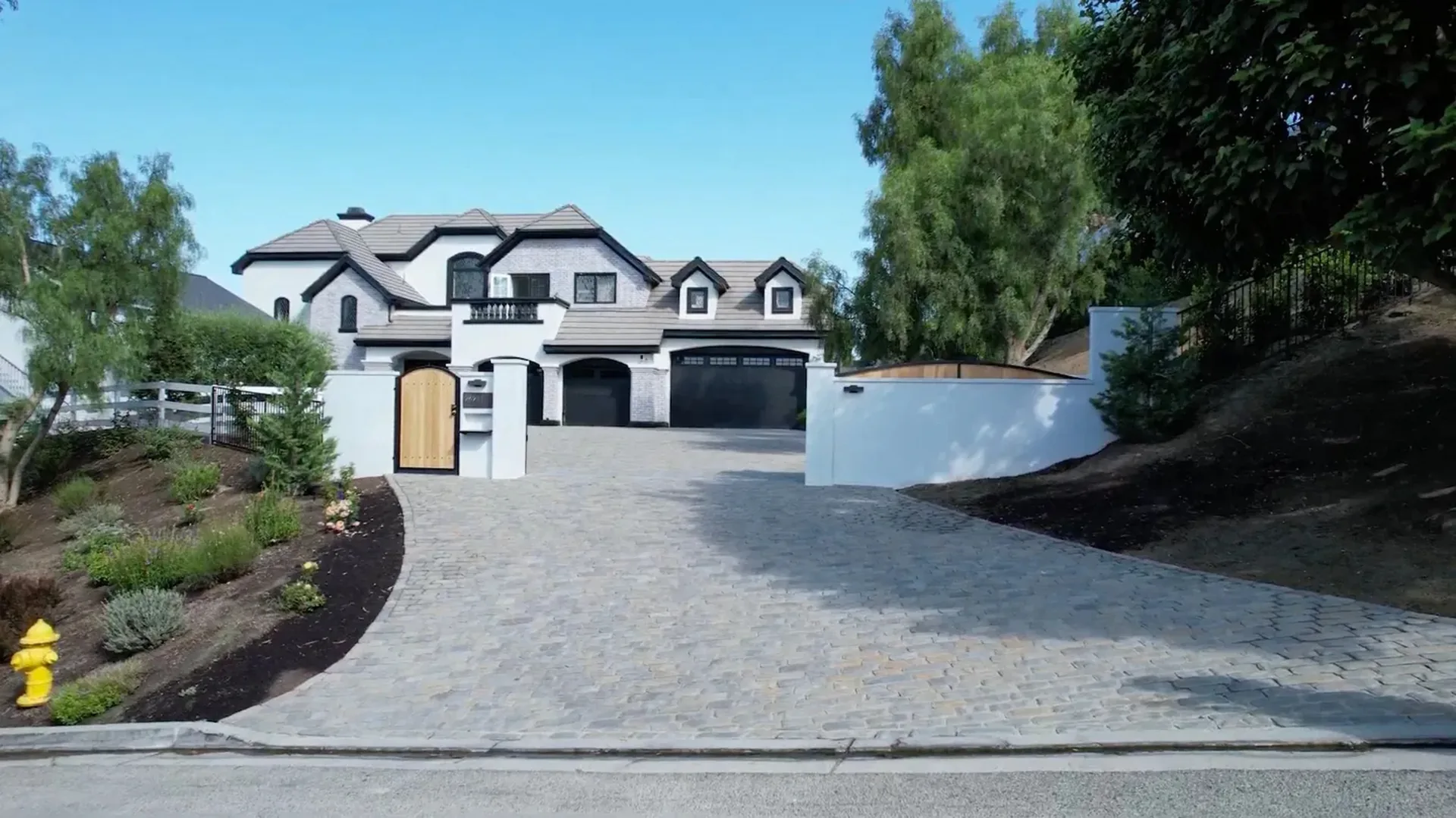
Illustrative property view.
On an older house, Long Beach pavers usually mean replacing something. A cracked original slab, a sunken patio or a brick drive gone uneven comes out first, and everything new sits on a rebuilt base.
Removing old paving can reveal conditions that need attention, such as soft ground, roots or an unsuitable base. The proposed preparation should address those findings and the intended use of the replacement surface.
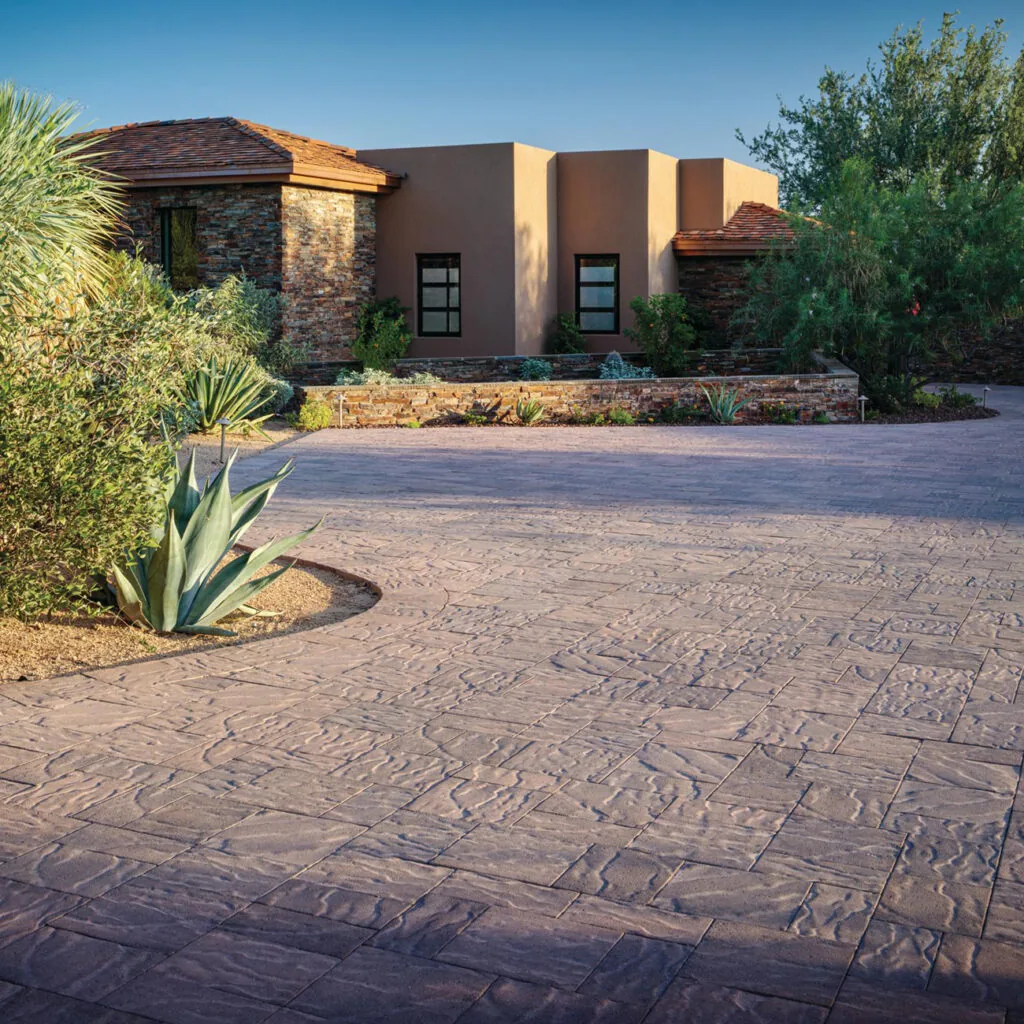
On an older property, the right material can feel at home from the start. Clay brick, stone-look pavers, natural stone or concrete offer different textures and patterns to compare against the facade and retained features.
Old brick or tired concrete comes out down to soil. Driveway-rated pavers in brick tones and shapes go onto new compacted base, every edge locked.
Swap the cracked slab for a new patio shaped around how your household lives outside, pitched so rain stays off the back step.
Front walks heaved by roots or sunk over the years, rebuilt straight and level, with a border that suits an older facade.
Concrete still suits plenty of older homes: a new slab, careful control-joint layout and a surface finish that fits the facade.
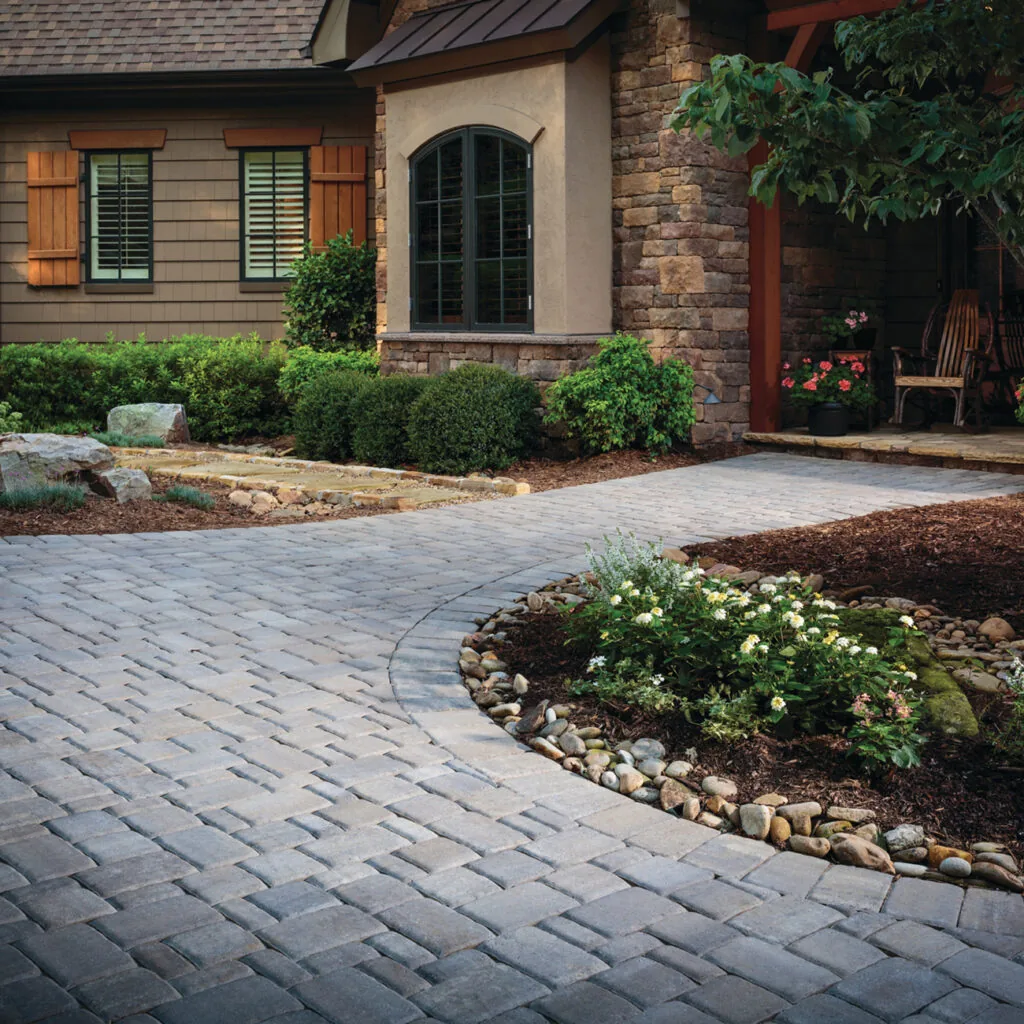
Take cues from the home and the garden around it. A quieter paving pattern, a curved path or a defined border can give the outdoor space a sense of continuity.
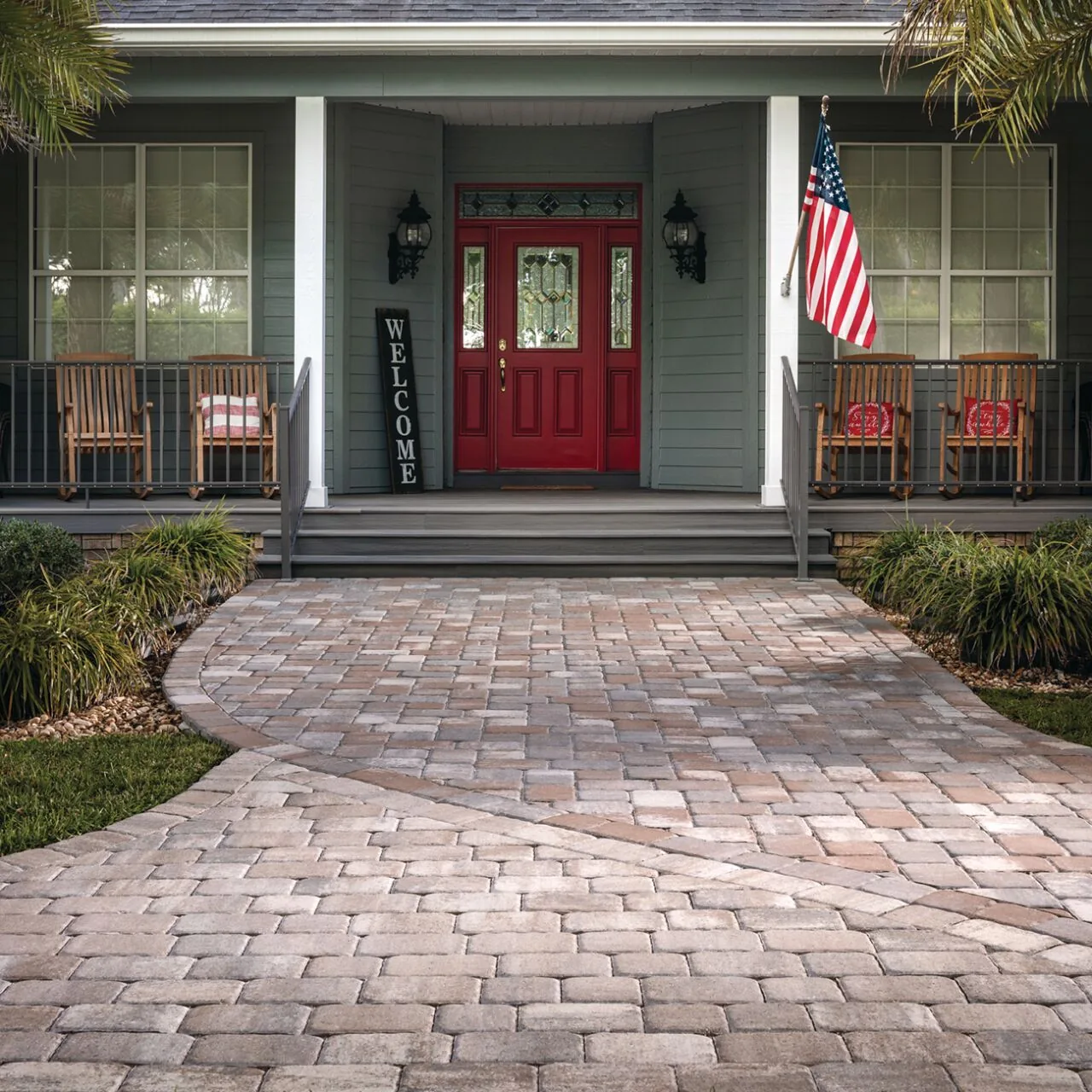
A curved front walk leads naturally to the porch.
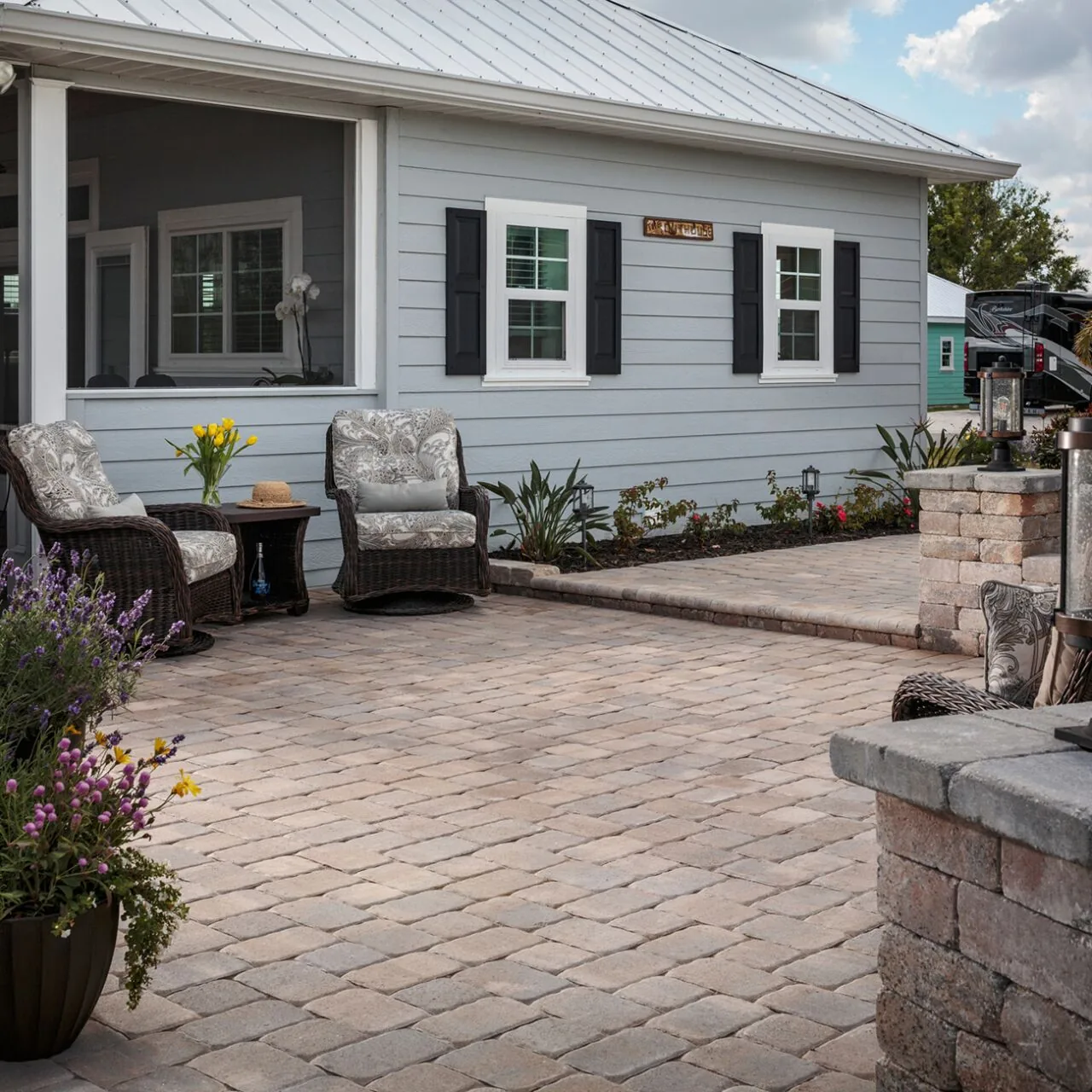
Paving makes room for a quiet seating area beside the house.
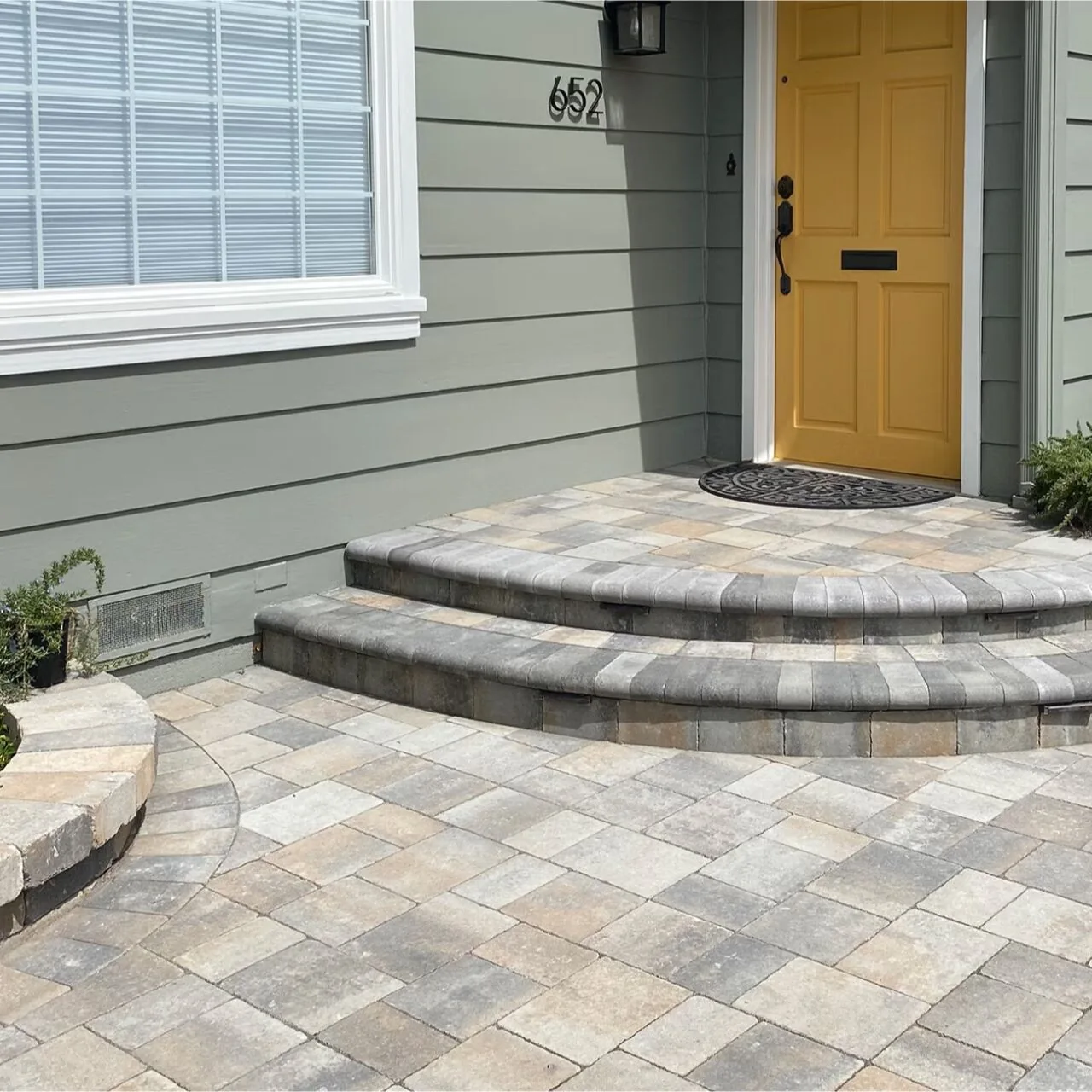
Rounded steps and coordinated paving finish the doorstep.
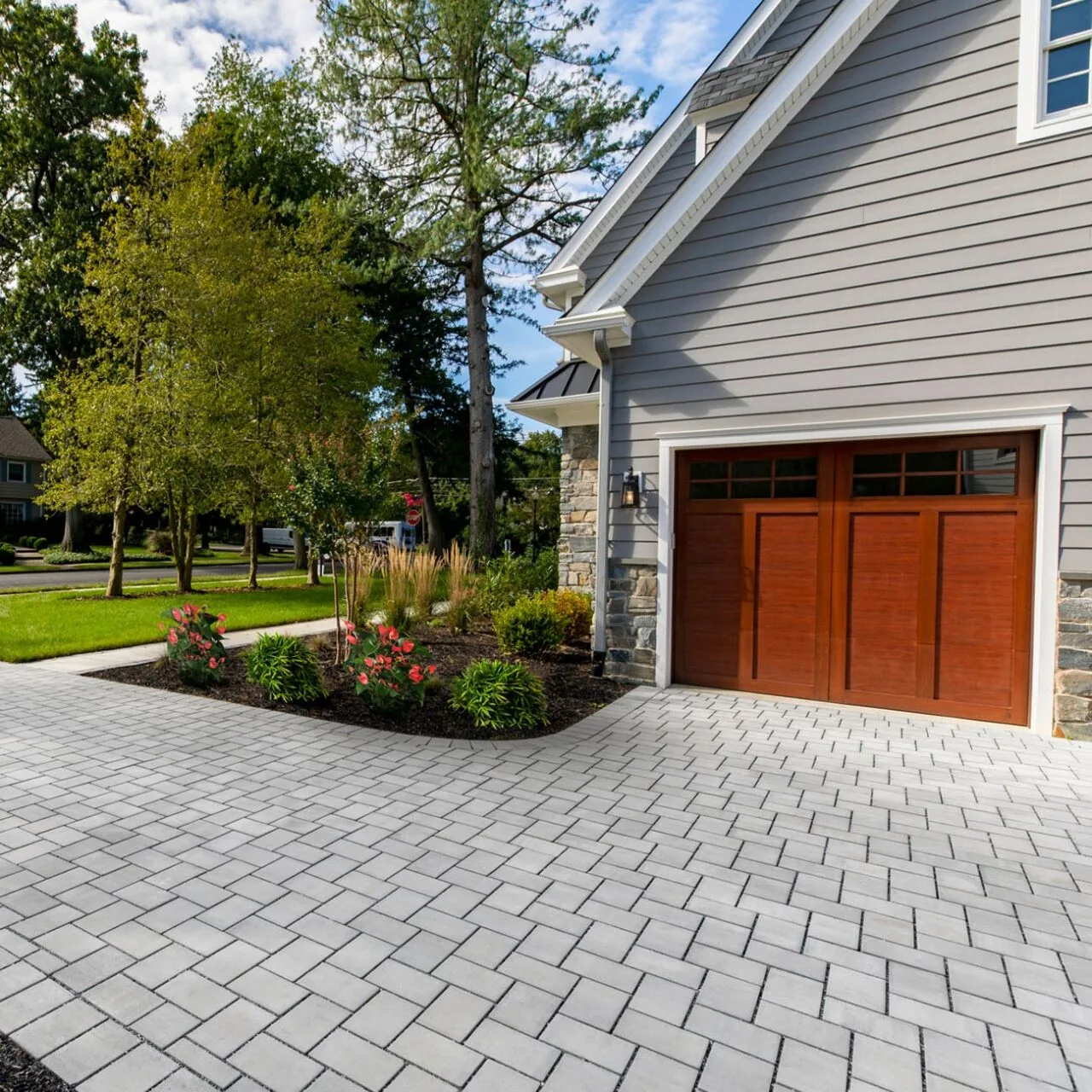
A consistent paving pattern finishes the approach to the garage.
Older yards tend to have a big tree, a path worn into the lawn and a slab nobody likes. Show us those, and the new patio and walks will work around what's worth keeping.
Photos of the current paving, the house front and where it meets the sidewalk.
Brick tones, a stone texture or concrete, plus the border and the pattern.
What comes out, what goes in and the price, written down before demolition.
Yes. OCIP can replace an old brick driveway with paving suited to vehicle use. Genuine clay brick and brick-look concrete pavers offer different material choices, so specify which you prefer. The condition of the existing surface, base, finished levels and drainage should be assessed before the replacement system is selected.
They're planned from the back door out. The patio sits below the threshold and falls gently away from the foundation, so rain moves off toward the yard instead of the house. Then it's sized for the furniture you'll use and linked by a path to the driveway and side gate.
The connection needs to be planned around the garage, door and sidewalk levels. A flush transition may be suitable in some locations, but the drainage and building details also matter. Assessing those fixed points first helps determine the preparation and finished height for the new paving.
It depends on the district and the work, so ask before you choose. If your house sits in a historic district such as Bluff Park, check with the city about front-yard paving early, then pick materials with that answer in hand. We'll put the chosen pavers, pattern and border in writing, so you have specifics to show.
Yes. OCIP installs poolside paving and can coordinate coping or pool remodeling with the surrounding work. Licensed subcontractors may be involved depending on the scope. On an older pool, assess the existing deck, pool connection, finish and drainage together before deciding what should be replaced.
Yes. Long Beach remains part of OCIP’s residential service coverage even though it is in Los Angeles County. Share the driveway, patio or walkway you want to improve and the existing surface. Use the estimate form or call 714-627-5543, and email supporting photographs to tyler@ocip.biz.
Show us what's worn out at your Long Beach home. Estimates are free.
BRICK-LOOK DRIVEWAYS & PATIOS
Refresh the driveway, patio or walks at your Long Beach home, with materials and proportions that respect the house and improve how the space works.
Illustrative property view.
On an older house, Long Beach pavers usually mean replacing something. A cracked original slab, a sunken patio or a brick drive gone uneven comes out first, and everything new sits on a rebuilt base.
Removing old paving can reveal conditions that need attention, such as soft ground, roots or an unsuitable base. The proposed preparation should address those findings and the intended use of the replacement surface.
On an older property, the right material can feel at home from the start. Clay brick, stone-look pavers, natural stone or concrete offer different textures and patterns to compare against the facade and retained features.
Old brick or tired concrete comes out down to soil. Driveway-rated pavers in brick tones and shapes go onto new compacted base, every edge locked.
Swap the cracked slab for a new patio shaped around how your household lives outside, pitched so rain stays off the back step.
Front walks heaved by roots or sunk over the years, rebuilt straight and level, with a border that suits an older facade.
Concrete still suits plenty of older homes: a new slab, careful control-joint layout and a surface finish that fits the facade.
Take cues from the home and the garden around it. A quieter paving pattern, a curved path or a defined border can give the outdoor space a sense of continuity.
A curved front walk leads naturally to the porch.
Paving makes room for a quiet seating area beside the house.
Rounded steps and coordinated paving finish the doorstep.
A consistent paving pattern finishes the approach to the garage.
Older yards tend to have a big tree, a path worn into the lawn and a slab nobody likes. Show us those, and the new patio and walks will work around what's worth keeping.
Photos of the current paving, the house front and where it meets the sidewalk.
Brick tones, a stone texture or concrete, plus the border and the pattern.
What comes out, what goes in and the price, written down before demolition.
Yes. OCIP can replace an old brick driveway with paving suited to vehicle use. Genuine clay brick and brick-look concrete pavers offer different material choices, so specify which you prefer. The condition of the existing surface, base, finished levels and drainage should be assessed before the replacement system is selected.
They're planned from the back door out. The patio sits below the threshold and falls gently away from the foundation, so rain moves off toward the yard instead of the house. Then it's sized for the furniture you'll use and linked by a path to the driveway and side gate.
The connection needs to be planned around the garage, door and sidewalk levels. A flush transition may be suitable in some locations, but the drainage and building details also matter. Assessing those fixed points first helps determine the preparation and finished height for the new paving.
It depends on the district and the work, so ask before you choose. If your house sits in a historic district such as Bluff Park, check with the city about front-yard paving early, then pick materials with that answer in hand. We'll put the chosen pavers, pattern and border in writing, so you have specifics to show.
Yes. OCIP installs poolside paving and can coordinate coping or pool remodeling with the surrounding work. Licensed subcontractors may be involved depending on the scope. On an older pool, assess the existing deck, pool connection, finish and drainage together before deciding what should be replaced.
Yes. Long Beach remains part of OCIP’s residential service coverage even though it is in Los Angeles County. Share the driveway, patio or walkway you want to improve and the existing surface. Use the estimate form or call 714-627-5543, and email supporting photographs to tyler@ocip.biz.
Show us what's worn out at your Long Beach home. Estimates are free.