Color
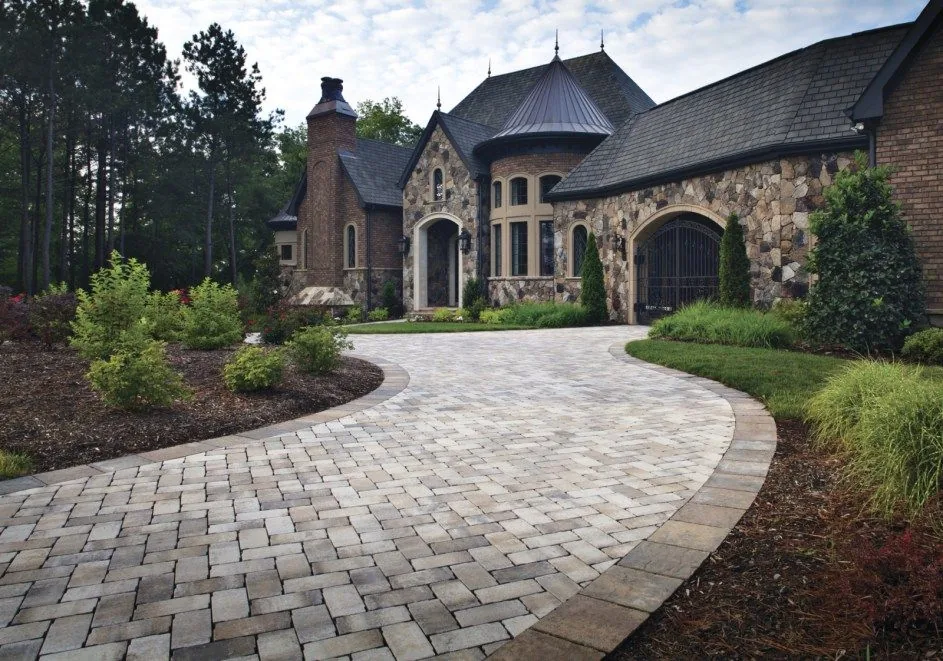
Pull tones from the roof, trim and garage door. Decide whether the paving should blend with the house or frame it with contrast.
CHOOSING INTERLOCKING PAVERS
Concrete, porcelain, natural stone and clay brick. Choose a surface that suits the architecture, the way you use the space and the finish you want.
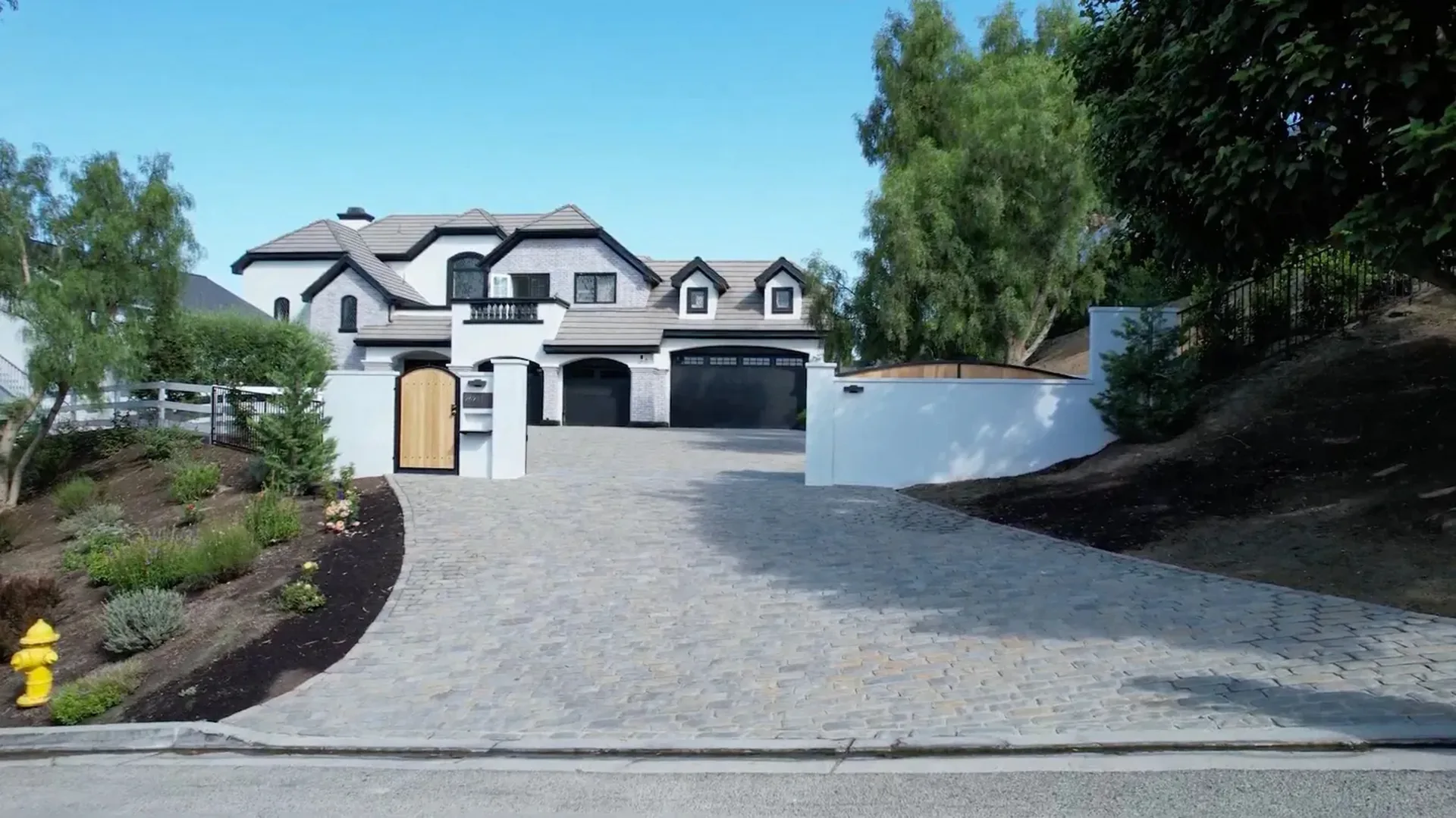
Illustrative property view.
A MATERIAL GUIDE
A sample in your hand shows color and texture. Interlocking pavers on your driveway show something bigger: a pattern running across the whole front of the house, next to the garage door, the walls and planting.
Start with the space. The same material can feel different across a broad driveway, an intimate dining patio or a narrow path. OCIP installs concrete, porcelain, natural stone and clay brick, with the product and layout chosen for each area.
Then match the look to the load. A paver that works under patio chairs is not automatically right for a driveway, so check its vehicle rating.
FOUR CONNECTED CHOICES
Pull tones from the roof, trim and garage door. Decide whether the paving should blend with the house or frame it with contrast.
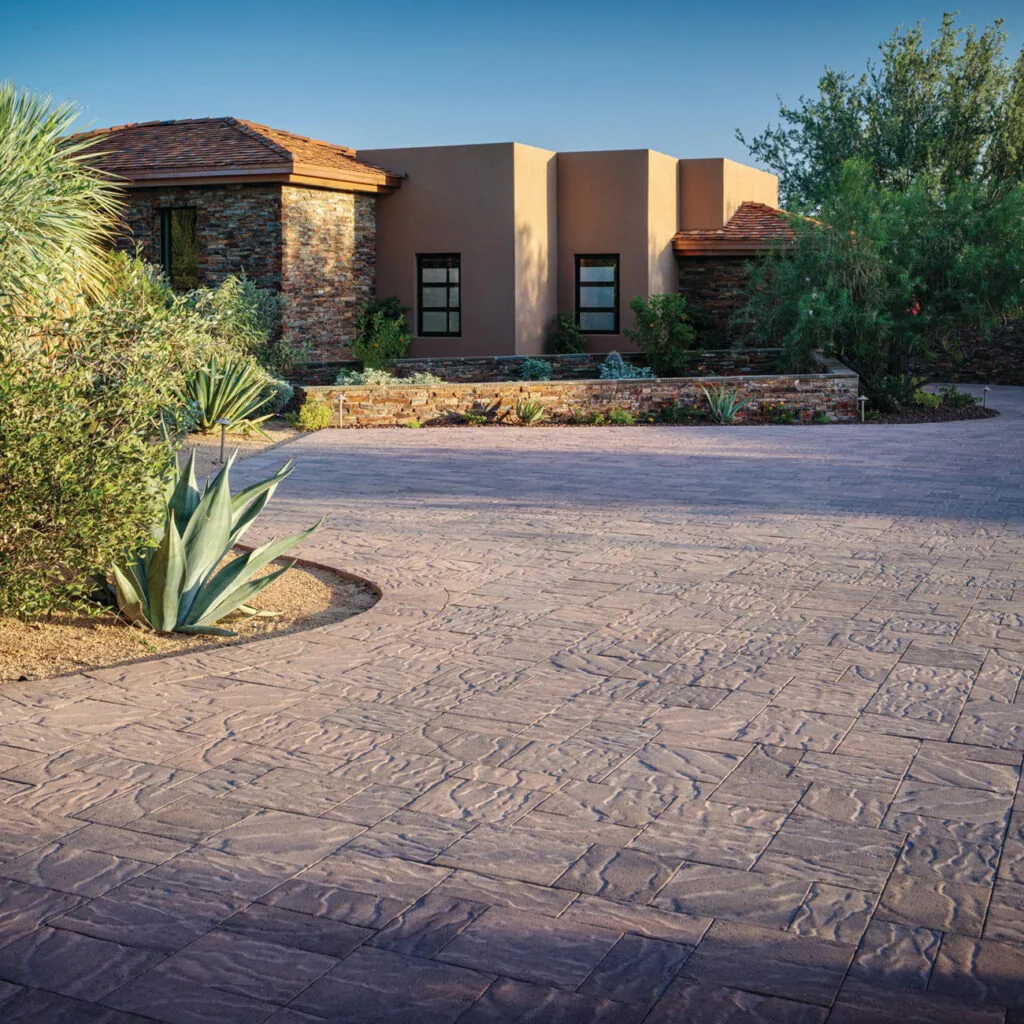
Judge unit size from the front door, the patio and the street. What reads busy up close can look calm from farther back.
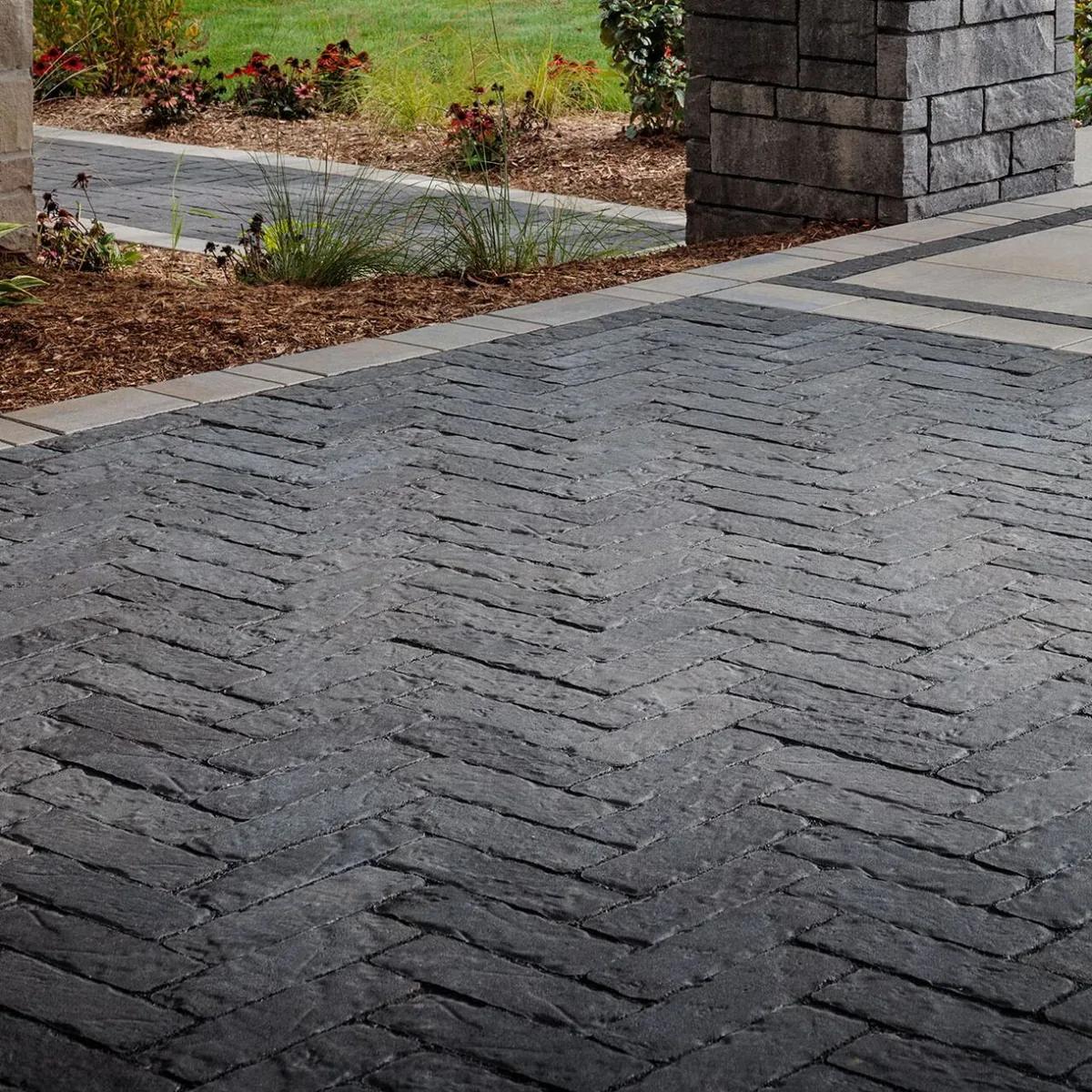
Set the direction first. Laying the pattern along the drive or across it changes how long or wide the space looks, and where cuts land.
A soldier course or contrasting band frames the field and gives the edge restraint a clean line to hold where pavers meet lawn, beds or walls.
THE CONSTRUCTION UNDERNEATH
Conventional interlocking concrete pavers work with bedding, a compacted base, prepared ground, edge restraints and joint material. Porcelain, natural stone and clay products can have different installation requirements.
Ask how the selected product will be installed for your site and use. Ground conditions, finished heights, drainage and vehicle loads all influence the specification below the surface.
BEFORE YOU COMMIT
Set samples where the paving will go and check them in morning and late-day sun. Wet them too, since color deepens when damp.
Then check the scope. It should name the paver line, color, pattern and border you picked, so the surface that gets built matches the one you chose.
OCIP installs concrete pavers, porcelain, natural stone and clay brick. Each offers a different combination of color, texture and character. The choice also needs to suit the intended use, including vehicle loads where applicable, and the installation requirements of the selected product.
They can be. A driveway must support vehicle loads and turning traffic, while a patio is primarily for people and furniture. Some products are suitable for both; others are not. Confirm the exact product, thickness and supporting construction before carrying a patio selection onto the driveway.
Begin with the product and intended use, then consider the architecture. Herringbone is one option for interlocking concrete driveways, while patios may suit running bond, mixed sizes or a simpler grid. Pattern direction, borders and where cuts fall all affect how the finished area relates to the house.
A mid-tone blend usually does. A mix of shades in tan, gray or charcoal hides dust, leaves and tire marks better than a single solid color. Very light pavers show stains, and very dark ones show dust and get hotter underfoot in summer sun.
It depends on the shape of the space. Large-format units suit open, square-edged patios and keep the surface looking calm, with fewer joints. Smaller units handle curves and narrow side paths, where big pieces would need lots of cuts. Many layouts mix two or three sizes.
Compare the same scope, not just the final price. Look for the proposed area, removal, product, pattern, borders, supporting construction, drainage and cleanup. Note any exclusions and ask how changes will be handled. That makes it easier to understand what each installer is actually proposing.
PICKED A LOOK YET?
Send photos of looks you like and the area to pave. We'll help you choose.